


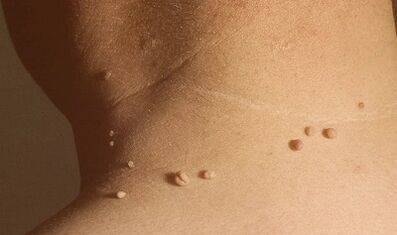
Papilloma is a benign skin tumor in the form of small growths and warts.Today, papillomas have been proven to be of viral origin.You can contract the disease when the virus enters the skin through small breaks and microcracks.Currently, several main types of papillomas have been identified: flat, simple, plantar, filiform and marked.There are papillomas transmitted through unprotected sex.Such neoplasms are called genital warts and pose a great threat to a woman's health.The place of their localization is the external genitalia, cervix.Such papillomas are usually ignored, because they do not detect their presence in some way.However, there is a high probability that they will turn into a malignant tumor of the cervical mucosa.
Causes of papillomas
The cause of the disease is the human papillomavirus (abbreviated HPV) belonging to the papoviridae family.Once in the human body, the papilloma virus invades the basal cells of the epithelium, where it is actively rebuilt.The appearance of papillomas or warts on the skin is the result of high viral activity.The neoplasm itself consists of epithelial tissue with blood vessels, so injury can cause bleeding.
The appearance of most papillomas localized on the outer integument of the body is not accompanied by the appearance of any symptoms.Sometimes they can feel themselves with mild tingling and itching of the skin.It can be recognized by the appearance of papilloma.Externally, it is a small growth that rises above the skin and, as a rule, does not differ from it in color.Sometimes light brown papillomas are found.Large neoplasms, reaching two centimeters and localized in open areas of the body (neck, décolleté, face), can cause aesthetic discomfort.
The cause of papilloma is most often a weakened immune system that cannot cope with the virus that enters the body in time.Risk factors include: smoking, alcohol abuse, frequent stress, diseases of the digestive system, promiscuity.You can catch the disease when visiting swimming pools, saunas and public baths.Papilloma is transmitted from mother to baby during childbirth.Located in the deep layers of the epithelium and not felt, the virus is considered inactive;It does not pose a threat to the wearer or his surroundings.Therefore, its presence in the human body is not an indication for treatment.Papilloma becomes infectious when it reaches the upper layers of the skin and is localized above its surface in the form of a visible neoplasm.
Treatment of papillomas
Self-treatment of papilloma is not recommended.At best, the result will be no positive outcome;In the worst case, a secondary infection will be introduced under the skin.You can't remove the papilloma yourself, remove it or comb or scratch it with your fingernails.A wrongly removed papilloma will reappear in the same place after a while.Therefore, this delicate matter should be entrusted to a specialist - a dermatologist.

Today, there are several ways to remove papilloma:
- Electrocoagulation;
- Laser removal;
- Removal with a radio knife;
- Cryodeestris.
Electrocoagulation involves exposing the affected area of the skin to a high-frequency current, under the influence of which the protein tissue will coagulate.Anesthesia is used in the case of removal of a large papilloma.The main advantage of this method is that the removal procedure itself is completely bloodless, leaving no traces of medical intervention.
The use of lasers for medical purposes has made life easier for both doctors and patients.Today, more serious surgeries are performed using lasers than just removing a simple cold.The laser method for removing benign skin tumors is known all over the world.It has many advantages: a quick procedure, comparative painlessness, blood and scars on the skin that appear after the papilloma is removed with a surgical scalpel.After the laser removal of the papilloma, a thin protective film is formed on the patient's skin, which after 12-14 days separates from the healthy skin on its own skin, which is no different from the rest of the body.
It is recommended to use a special radioknife, which cuts the entire area of the epithelial tissue together with the papilloma where the tumor is located, for patients who are not afraid of the reappearance of the papilloma or are not afraid of getting rid of it.The operation, of course, is performed using anesthesia, and the papilloma in this area of the skin is comfortable for life.
Another way to remove unwanted blemishes on the skin is by sparing the tumor using liquid nitrogen.The procedure itself is painless, but it has one drawback - in some cases, for example, with genital warts, it is ineffective.
A specialist can show which method is the most effective to remove the papilloma in each specific case.Once you have decided to get rid of the unpleasant manifestations of the virus on your skin once and for all, you should pay special attention to the institution where the procedure itself will be performed.Now, many beauty salons offer the removal of moles, papillomas and warts for a relatively low fee, but most cannot guarantee the complete safety of removal and the absence of unwanted consequences.As a practice, it is recommended to determine the exact origin of all skin tumors, including papillomas, after consulting a dermatologist who will diagnose the disease, and only then prescribe the removal procedure.